Technology has changed almost every aspect of running a modern business, and the professional beauty industry is no exception.
For salon owners, clinics, and independent practitioners, technology is no longer limited to booking systems, websites, and digital payments. Increasingly sophisticated equipment is also changing the treatments businesses can offer their clients.
Professional beauty businesses now have access to hydradermabrasion, microdermabrasion, radio frequency, ultrasonic cavitation, LED light therapy, and other technologies that can be incorporated into modern treatment menus.
At the same time, manufacturers are increasingly combining several technologies within one professional platform.
For UK beauty businesses, this creates opportunities to expand services, make better use of treatment-room space, and potentially generate additional revenue from professional equipment.
However, technology should be approached as a business investment rather than simply another purchase.
The Professional Beauty Industry Is Becoming More Technology-Led
Traditional beauty treatments continue to have an important place within salons, but professional equipment has significantly expanded what appropriately trained practitioners can provide.
This development has been driven partly by advances in the equipment itself.
Machines have become increasingly multi-functional, while digital controls and modern interfaces can make professional systems easier for trained practitioners to operate.
See alos: Is Your Home Ready for Your Golden Years? A Safety Guide
Technology Is Changing Client Expectations
Clients have also become considerably more aware of professional beauty technology.
Social media, online beauty publications, and digital marketing mean consumers frequently encounter treatments before ever entering a salon.
They may already recognize terminology such as hydradermabrasion, microdermabrasion, radio frequency, or LED light therapy.
For businesses, this can create demand for more technology-led services.
However, salons should still assess whether a particular technology genuinely fits their client base before investing.
The Development of Multi-Function Facial Equipment
One of the most significant changes within professional beauty equipment has been the growth of multi-function systems.
Previously, businesses might have required individual machines for different facial technologies.
Modern professional platforms can combine several functions within one system.
Why Multi-Function Technology Appeals to Salons
There are obvious practical benefits.
Treatment-room space is valuable, particularly for smaller salons and independent practitioners.
Combining several technologies within one professional system can reduce the number of separate machines required.
There can also be commercial advantages.
If appropriately trained practitioners can use several functions within their treatment menu, one equipment investment may potentially contribute to multiple professional services.
Hydradermabrasion and Modern Facial Technology
Hydradermabrasion is one technology that has become increasingly familiar within professional facial services.
It combines controlled suction with a liquid-based approach to cleansing and exfoliation and can form part of multi-stage professional facial protocols.
For salons researching a professional hydradermabrasion machine, modern multi-function equipment can provide considerably more than the core Hydra function.
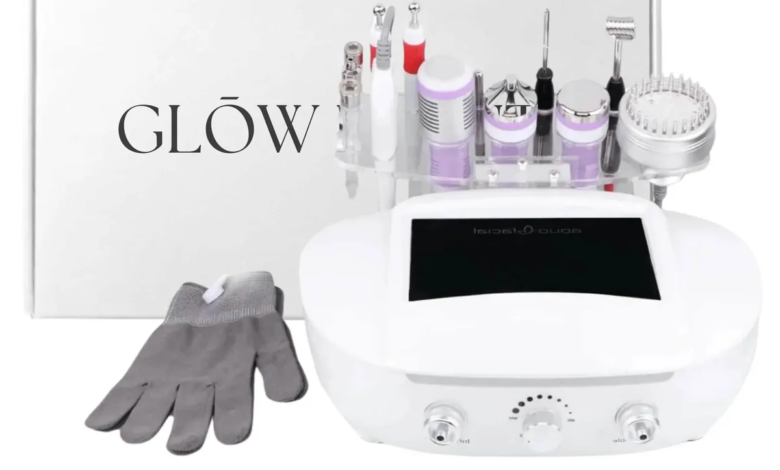
The Glow Beauty Case 9-in-1 Diamond Crystal Hydra Dermabrasion Machine, for example, combines Hydra technology with additional professional facial functions within one system.
This type of equipment demonstrates how beauty technology is moving towards increasingly integrated professional platforms.
Why Integration Matters to Beauty Businesses
Integration is already familiar within many other areas of business technology.
Companies increasingly prefer software platforms capable of performing several related tasks rather than maintaining numerous disconnected systems.
A similar principle can apply to professional beauty equipment.
Reducing Equipment Complexity
Several individual machines mean several pieces of equipment to store, operate, and manage.
An integrated professional system can simplify the treatment environment.
This does not mean that multi-function equipment is automatically better than dedicated machines.
Instead, businesses need to determine whether the combined functions are genuinely useful to their treatment menu.
Digital Interfaces Are Changing Professional Equipment
Professional beauty machines have also become increasingly digital.
Modern systems can include touchscreen interfaces, digital settings, and clearer operating controls.
For trained practitioners, these features can improve usability.
Technology Should Improve Control, Not Replace Training
An easy-to-use interface does not remove the need for professional knowledge.
Practitioners still need to understand the technologies they are providing.
Client consultation, contraindications, treatment protocols, hygiene, and aftercare remain essential regardless of how sophisticated the equipment interface becomes.
Technology should support practitioner knowledge rather than attempt to replace it.
Why Beauty Businesses Need a Technology Strategy
Salons can easily fall into the trap of purchasing equipment whenever a new treatment becomes popular.
That is rarely the strongest commercial approach.
Instead, beauty businesses can develop a basic technology strategy.
Start With the Business Objective
Before investing, ask:
- Which treatments do clients currently request?
- Which services are missing from the existing menu?
- Which technologies complement current treatments?
- What training will be required?
- How much treatment-room space is available?
- What is the expected equipment utilization?
- How much revenue could the new services realistically generate?
These questions can help distinguish useful technology from unnecessary expenditure.
Client Demand Should Drive Investment
Technology is most commercially useful when there is genuine demand for the service it supports.
Existing clients can provide valuable information.
Practitioners can monitor which treatments clients ask about and which concerns regularly appear during consultations.
Avoid Buying Purely Because of Online Trends
Beauty trends can become extremely visible online.
However, online attention does not guarantee sustainable bookings for every salon.
Businesses should consider local demand and their existing client demographic before investing heavily.
This reduces the risk of expensive equipment remaining unused.
Professional Equipment Is a Business Asset
A beauty machine used commercially should be viewed as a business asset.
That means its value should be assessed according to more than its appearance or initial price.
Calculate Return on Investment
Businesses can consider:
- equipment cost;
- training expenses;
- professional insurance;
- consumables;
- treatment pricing;
- appointment duration;
- expected weekly bookings; and
- ongoing operating costs.
This provides a clearer indication of whether the technology makes commercial sense.
Why Equipment Utilization Matters
A relatively inexpensive machine can still represent poor value if it is rarely used.
Likewise, more advanced equipment can potentially provide stronger value when it supports several frequently booked services.
This makes utilization an important consideration.
Multi-Function Equipment Can Increase Opportunities
When several relevant technologies are available within one system, appropriately trained practitioners may have more opportunities to use the equipment.
However, this only creates value when those functions genuinely correspond with client demand.
Unused functions have little commercial benefit.
Technology Can Help Smaller Beauty Businesses Compete
Advanced professional equipment is no longer limited to very large clinics.
Compact systems and different equipment price points have made technology accessible to smaller businesses.
Independent practitioners can therefore develop sophisticated treatment menus without necessarily operating from large commercial premises.
Space-Efficient Technology Is Particularly Valuable
For smaller salons, every piece of equipment needs to justify the space it occupies.
Multi-function systems can help by consolidating several technologies within one platform.
This can allow businesses to expand without overcrowding the treatment room.
Choosing a Professional Beauty Equipment Supplier
The supplier is another important part of the technology decision.
Professional equipment may remain within the business for years.
Salon owners should therefore consider what support exists after purchase.
Glow Beauty Case and Professional Beauty Technology
Glow Beauty Case is a UK limited company supplying professional beauty technology to salons, clinics, and trained practitioners.
Its equipment range includes hydradermabrasion, diamond microdermabrasion, ultrasonic cavitation, radio-frequency, and other professional facial and body systems.
For UK professional buyers, purchasing through a UK-based business provides an identifiable point of contact for order and equipment support.
Why Supplier Support Matters
Professional equipment can become central to a treatment menu.
Questions may arise relating to setup, documentation, accessories, warranty, or technical operation.
Having access to an identifiable supplier can therefore contribute to the overall value of the equipment investment.
Warranty Is Part of the Technology Investment
Professional equipment used commercially needs appropriate consideration of warranty protection.
If a machine is used for regular client appointments, equipment downtime can have a direct impact on the business.
Buyers should understand what warranty is included before purchasing.
Look Beyond the Initial Price
Two machines with similar specifications may provide very different long-term value.
Supplier support, warranty, documentation, and useful functionality can all influence the true cost of ownership.
This is why professional equipment should not be compared on price alone.
Training Remains Essential as Technology Advances
Professional equipment may become easier to operate, but the treatments themselves still require appropriate knowledge.
Practitioners should have suitable training for the services they intend to provide.
Check Professional Insurance Requirements
Insurance requirements can vary between providers.
Beauty professionals should confirm their own training, treatment, and equipment requirements with their professional insurer before introducing new services.
A multi-function machine containing several technologies does not automatically mean a practitioner is trained or insured to provide all of them.
Professional Equipment Documentation Matters
Technology-led businesses need appropriate records.
Professional beauty is no different.
Practitioners should understand what documentation accompanies their equipment and retain relevant information where appropriate.
This can also be important when discussing treatments and equipment with professional insurers.
Technology Can Support Better Client Experiences
Beauty technology is ultimately part of a professional service.
Clients are not simply paying to use a machine.
They are paying for consultation, practitioner knowledge, professional surroundings, treatment time, and client care.
The Machine Should Support the Practitioner
Technology is most valuable when it helps practitioners deliver a well-structured professional service.
It should not become the entire client experience.
A sophisticated machine cannot compensate for poor consultation or inadequate professional knowledge.
Technology Can Support Business Diversification
Introducing new equipment can allow beauty businesses to broaden their services.
A salon primarily providing traditional facial treatments may decide to introduce technology-led facial services.
An established facial specialist may add more advanced multi-function equipment.
The right direction depends on the individual business.
Existing Clients Can Support Expansion
Businesses do not always need to attract entirely new audiences for new technology.
Frequently Asked Questions About Professional Beauty Technology
What technology is used in modern professional beauty salons?
Modern professional salons can use technologies including hydradermabrasion, diamond microdermabrasion, ultrasonic cavitation, radio frequency, LED light therapy, and other professional face and body systems.
What is a hydradermabrasion machine?
A hydradermabrasion machine is professional facial equipment using liquid-based cleansing and exfoliation together with controlled suction.
Some professional systems combine hydradermabrasion with several additional facial technologies.
Are multi-function beauty machines suitable for salons?
They can be particularly useful for salons that want access to several complementary technologies while limiting the number of separate machines required.
The best choice depends on practitioner training, client demand, and the intended treatment menu.
Are professional beauty machines becoming more technologically advanced?
Yes. Modern systems increasingly combine several treatment technologies and can incorporate digital interfaces, touchscreen controls, and multi-function handpieces.
Do beauty professionals need training to use advanced equipment?
Practitioners should have appropriate training for the treatments they intend to provide and should confirm their individual requirements with their professional insurer.
Is Glow Beauty Case a UK professional beauty equipment supplier?
Yes. Glow Beauty Case LTD is a UK-based professional beauty equipment supplier serving salons, clinics, and trained practitioners.
What types of machines does Glow Beauty Case sell?
Glow Beauty Case supplies professional equipment including hydradermabrasion machines, microdermabrasion systems, ultrasonic cavitation machines, radio-frequency equipment, and other professional facial and body technologies.
Why might a salon choose a multi-function facial machine?
A multi-function system can provide several complementary technologies through one professional platform, potentially saving treatment-room space and allowing suitably trained practitioners to develop a broader service menu.
What should a beauty business consider before investing in technology?
Businesses should consider client demand, practitioner training, professional insurance, equipment specification, available space, warranty, documentation, supplier support, and realistic return on investment.
Does buying the machine with the most functions provide the best value?
Not necessarily. The most valuable equipment is generally the machine containing functions that the business genuinely intends and is appropriately qualified to use.
Why does supplier support matter with professional beauty technology?
Professional machines can become revenue-generating business assets. Access to supplier support can therefore be useful if questions arise about the order, documentation, warranty, or equipment.
Can technology help smaller beauty businesses expand?
Appropriately selected equipment can allow smaller salons and independent practitioners to introduce additional services without necessarily requiring significantly larger premises.
The Future of Technology in Professional Beauty
Professional beauty technology is likely to continue developing.
Machines will become increasingly integrated, and digital controls may continue improving.
AI and digital research tools may also change how practitioners compare equipment and develop treatment menus.
However, the fundamentals of professional beauty are unlikely to disappear.
Training, consultation, client care, and professional judgment will remain essential.
Final Thoughts
Technology is transforming the professional beauty industry at several levels.
It is changing the treatments salons can provide, the equipment businesses purchase, the way practitioners manage treatment rooms, and even how professional buyers research potential investments.
Multi-function systems are particularly significant because they can bring several professional technologies together within one platform.
For UK beauty businesses, this can create opportunities to expand treatment menus while making more efficient use of equipment investment and available space.
However, technology should always support a clear business strategy.
Client demand, practitioner training, professional insurance, equipment documentation, warranty, supplier support, and realistic commercial potential should all influence investment decisions.
When technology is selected strategically rather than simply because it is new, professional beauty equipment can become a valuable tool for helping salons and independent practitioners develop stronger, more versatile businesses.