Gone are the days when you needed to hire a web designer or developer to get your site up and running. Today, anyone can build a professional-looking website using templates, AI, and other DIY tools.
In a survey of 500 business owners, only 45% could tell the difference between websites designed by humans and those built with AI. What’s more, 67% said they would deploy AI to create a website from scratch, while 75% were open to using it to improve an existing site.
Free website templates, like the ones from Wix, are just as popular, and you can customize them with AI. The result? A website that’s not only visually appealing but also aligned with your brand and target audience.
Web developers use AI and templates, too, as they help streamline their workflows and speed up deployment. So let’s take a closer look at what makes these tools so effective and how they’re shaping the future of web design.
From Code to No-Code: The Rise of AI and Website Builders
A custom website can cost anywhere from $1,000 to $100,000 or more, depending on its complexity and features. Timelines vary, but in most cases, you’re looking at a minimum of a few weeks to get it built.
By comparison, website templates are free or low-cost, with the average price around $50. On top of that, they allow you to create a website within hours, or instantly, if they integrate AI.
But why is there such a difference in cost and deployment time?
Most of the time, it comes down to the amount of work involved. Custom websites demand extensive coding, while those built with AI or templates cut down or even eliminate the need for it. AI tools can also streamline coding and website development, as well as various aspects of web design. A survey of 4,181 developers sheds light on this trend:
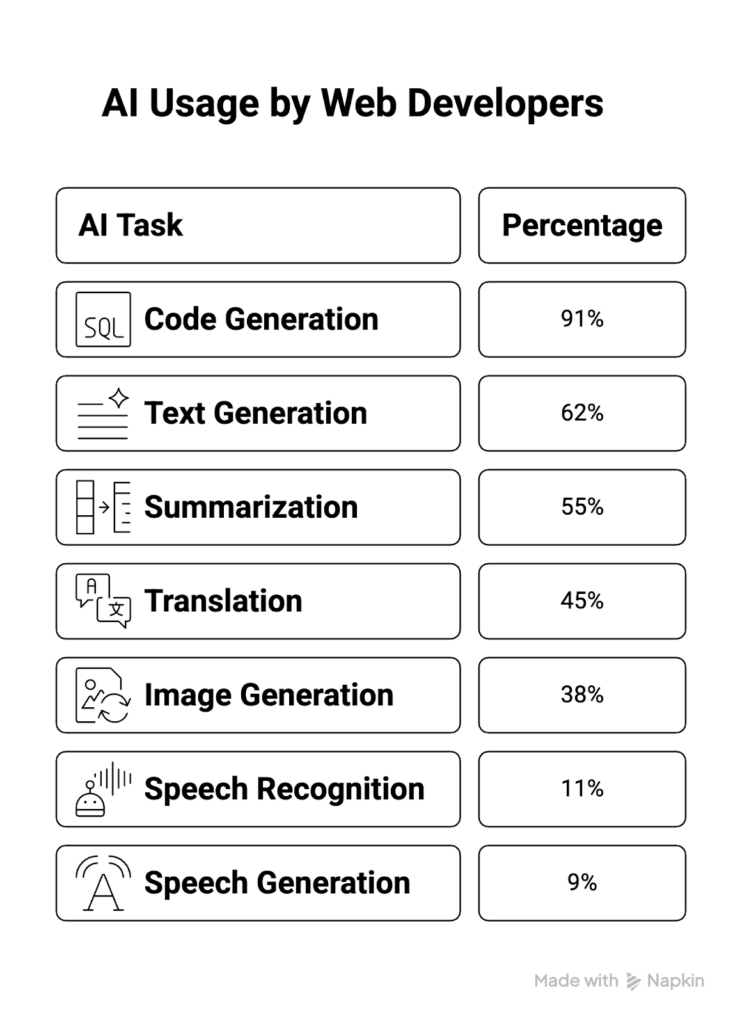
*Source: Devographics, The 2025 State of Web Dev AI survey
For instance, a developer creating a small business website can use AI to generate entire page layouts based on a given prompt. They may still need to make a few tweaks afterward, but their workload is significantly reduced.
The same developer can use a template with built-in sections to create the homepage, services page, and contact page. Instead of writing HTML, CSS, or JavaScript from scratch, they simply drag and drop elements, adjust colors and fonts, and let the template handle the underlying code.
No-code platforms make the process even easier. Their visual interface and AI-powered tools enable non-technical users to build websites or landing pages that look just as good as those created by pros.
See also: How Wearable Technology Is Enhancing Health and Fitness
AI Is Emerging as a Creative Partner
The use of AI goes beyond website design and development. It can also streamline content creation, photo editing and retouching, and other creative activities involved in running a site.
Suppose you sell fitness equipment. Whether you’re building a website or already have one, you can deploy AI to:
- Create on-brand visuals (e.g., workout videos or ad banners)
- Generate product descriptions
- Craft hero headlines or taglines
- Resize and upscale images without sacrificing quality
- Produce explainer videos to show how your equipment works
- Create mockups of your products in real-life settings
- Generate social media content, such as reels and animations
- Repurpose blog content into videos, slides, email newsletters, or social media posts
- Brainstorm content ideas
Note that website templates include placeholder text and, most often, stock photos. You can replace these with your own content, use AI to generate text and visuals, or combine both approaches.
Human Touch Still Matters
As mentioned earlier, more than half of business owners can’t tell whether a website was designed by humans or built with AI. That number is likely even higher among consumers.
However, AI cannot replace human touch—especially when it comes to building a brand. The same goes for website templates, which still require thoughtful customization to resonate with the target audience and keep your brand top-of-mind.
In a survey of 2,000 consumers, 50% were able to identify AI-generated copy. Respondents were split in their opinions: 56% found AI-generated content more engaging, while 44% preferred human-written content. They also agreed on the following:
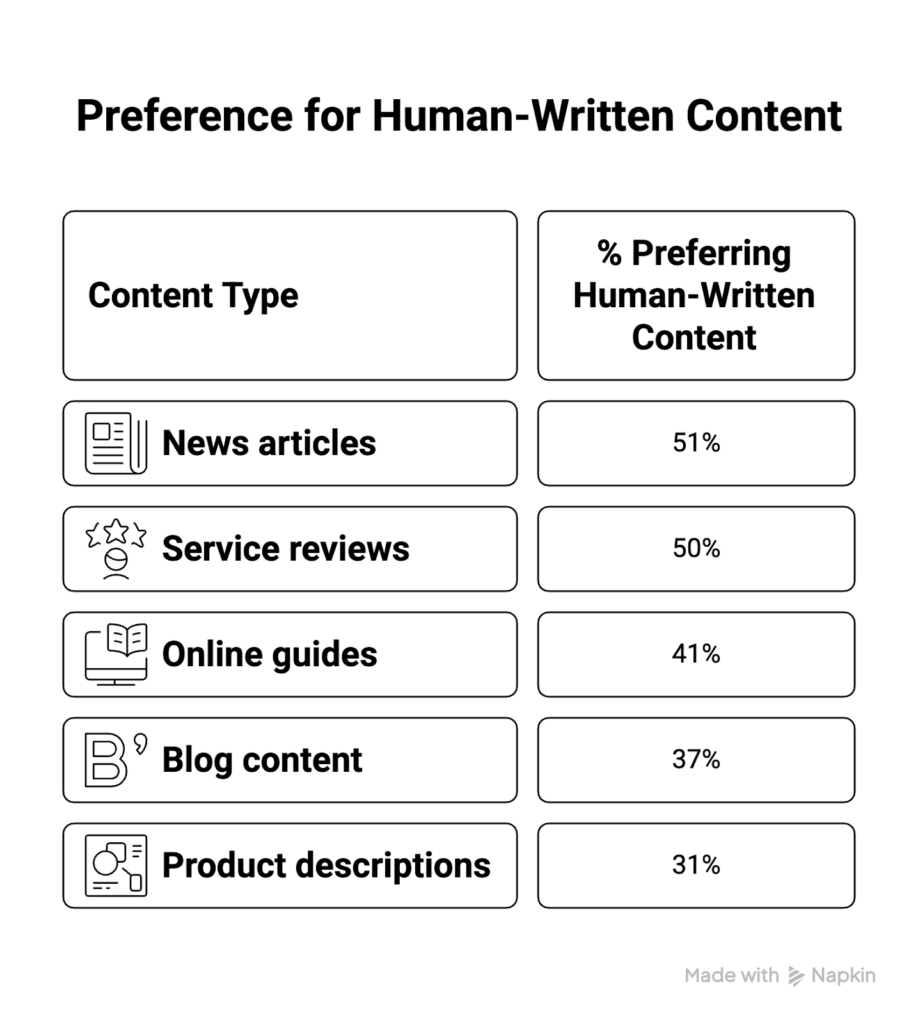
These findings show that consumers value human authorship for content perceived as highly informative or trustworthy, like news articles and service reviews. They’re far more accepting of AI-generated content for blog posts, online guides, and product descriptions.
In fact, 82% said they don’t mind if brands deploy AI for content creation as long as the piece feels like it was written by a real person. Still, 63% preferred that companies disclose when AI was used.
At the end of the day, AI and website templates can handle much of the heavy lifting, from web design to content creation. But to build trust, make sure your site feels authentic and human. Use AI where appropriate while adding personal touches that set your brand apart.
For example, there’s nothing wrong with creating a series of exercise videos with AI, or using it for product descriptions and service pages.
However, your blog posts, tutorials, and other pieces of content will feel more authentic and valuable if you share expert insights, case studies, and personal experiences, which AI simply can’t replicate.
Stay at the Forefront of Innovation
AI and website templates are shaping web design, making it easier to build an online presence. With just a few clicks, you can get your site up and running, generate weeks’ worth of content, and create stunning visuals, all while saving time and money.
These technologies can feel overwhelming, given how quickly they’re evolving and the possibilities they offer. But you don’t have to switch overnight.
Start with a website template that fits your brand, make small tweaks, and leverage AI to streamline tedious tasks like photo or video editing. As you learn the ropes, try out new tools and incorporate AI into your workflows while maintaining a human touch.
Remember to put quality first. Take the time to customize your template, review and optimize AI-generated content, and keep improving your site. Also, track the right metrics to see what works and what doesn’t, then adjust your strategy accordingly.