How Precision CNC Machining Is Becoming a Strategic Business Technology in the Age of Electrification

In the rapidly evolving landscape of manufacturing technology, few materials have proven as consistently vital as brass and copper alloys. These metals form the invisible backbone of countless industries—from electric vehicles and consumer electronics to medical devices and aerospace systems. As the global economy accelerates its transition toward electrification, automation, and sustainability, the precision machining of brass and copper components has emerged as a critical business technology that deserves closer attention.
The Market Opportunity: Scale and Trajectory
The numbers underscore the significance of this sector. The international copper alloy market continues to expand at a steady pace, driven by demand across renewable energy systems, electronics, and automotive sectors. Within this expanding ecosystem, the global brass CNC machining services market continues to grow steadily, reflecting the material’s enduring relevance across multiple industries.
The metal precision turned product manufacturing market—which encompasses brass, copper, and other alloy components—continues to expand at a compound annual growth rate of over five percent. The broader precision turned product manufacturing market is expected to grow from USD 121.05 billion in 2025 to USD 172.31 billion by 2031. These figures reflect not just market expansion but a fundamental shift in how products are designed, powered, and connected.
See also: Green Technology: Innovations for a Sustainable Future
Why Brass and Copper Are Business-Critical Materials
Brass and copper alloys offer a combination of properties that make them indispensable in modern manufacturing. Their exceptional electrical and thermal conductivity makes them the first choice for connectors, terminals, busbars, and heat exchangers. Their natural corrosion resistance suits them for fluid systems, plumbing components, and marine applications. Their machinability makes them attractive for high-volume production of complex parts.
Copper’s conductivity is particularly vital in the age of electrification. Electric vehicles contain substantially more copper than their internal combustion counterparts—wiring, busbars, motor windings, and battery connections all rely on its exceptional conductivity. Brass components appear throughout fuel systems, sensor housings, and thermal management systems. The growing copper content in EVs, combined with the expansion of renewable energy infrastructure, has made these materials strategic business assets.
The Technology Driving Precision
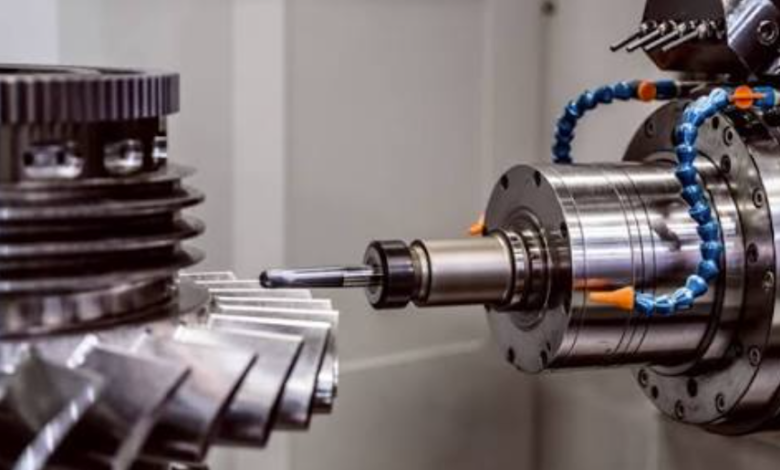
Meeting the exacting requirements of modern applications demands more than conventional CNC equipment. Swiss-type turning, originally developed for watchmaking, has become the technology of choice for complex, high-tolerance brass and copper components. Unlike conventional lathes where the workpiece extends unsupported from the chuck, Swiss machines feed material through a guide bushing positioned immediately next to the cutting tool. This design eliminates deflection and vibration, making it possible to hold tolerances that would otherwise be impossible to achieve consistently.
Modern Swiss machining centers integrate turning, milling, drilling, and threading in a single setup—often on machines with five to nine axes. This “done-in-one” approach reduces handling errors, shortens production cycles, and ensures that complex geometries can be produced repeatably across thousands or even millions of parts. When combined with automated bar feeders, in-process probing, and lights-out operational capability, Swiss machining offers a level of consistency that conventional turning simply cannot match.
The Supply Chain Opportunity
The reshoring and supply chain diversification trends of recent years have made partner selection more consequential than ever. Companies are bringing production closer to end markets, but they are discovering that domestic capacity for high-precision brass and copper machining is not unlimited. The shops that have invested in advanced equipment, skilled workforces, and documented material processes are the ones capturing the most demanding programs.
For procurement professionals, the assessment criteria have sharpened accordingly. Equipment matters: multi-axis CNC turning centers with live tooling, automated bar feeders, and in-process probing are now the baseline for serious work. Quality infrastructure matters: certifications and traceability systems provide the audit trail that regulated industries require. Material experience matters: a shop that has produced tens of thousands of brass and copper components understands the subtle behaviours that separate reliable production from costly scrap.
A specialist in brass and copper CNC machining brings more than equipment to the table. They bring process knowledge—the accumulated understanding of how these materials respond to cutting forces, how to manage chip formation, and how to achieve the surface finishes that customers require. This knowledge translates directly to consistency, reliability, and peace of mind for the companies that rely on them.
Strategic Sourcing in a Changing Landscape
The next twelve to eighteen months will likely determine which manufacturing partnerships deliver durable advantages. Demand signals are clear: precision-machined brass and copper components are moving toward tighter tolerances, more complex geometries, and higher production volumes. The reshoring trajectory is measurable, with manufacturers expecting activity to rise further. The technology required to meet today’s specifications is well understood, but it requires sustained capital investment and process discipline.
The shops that have made those investments—those that have built their operations around multi-axis Swiss turning, automated quality control, and a stable, skilled workforce—are positioned to capture the most demanding programmes. For customers, that translates into predictability, which in today’s uncertain environment is worth more than a small discount on the unit price. A provider of precision brass turned components brings deep experience to every order, understanding that these parts carry outsized responsibility in the assemblies they join.
Looking Ahead: The Business Opportunity
For companies that manufacture or source brass and copper components, the choice of machining partner has direct implications for cost, quality, and speed to market. Shops that have invested in advanced equipment—multi-axis CNC turning centers with live tooling, automated bar feeders, and in-process probing—can achieve cycle times that were unthinkable a generation ago. This translates directly to lower per-part costs and faster delivery schedules.
Companies that secure partnerships with such suppliers early will be better equipped to handle product complexity, respond to demand fluctuations, and navigate trade uncertainty. In an era where every component matters, material expertise and manufacturing capability have become the foundation of competitive advantage. Whether it is a brass fitting for a fluid system, a copper connector for an EV battery, or a precision component for a medical device, the quality of the machining process determines whether the final product performs as designed.